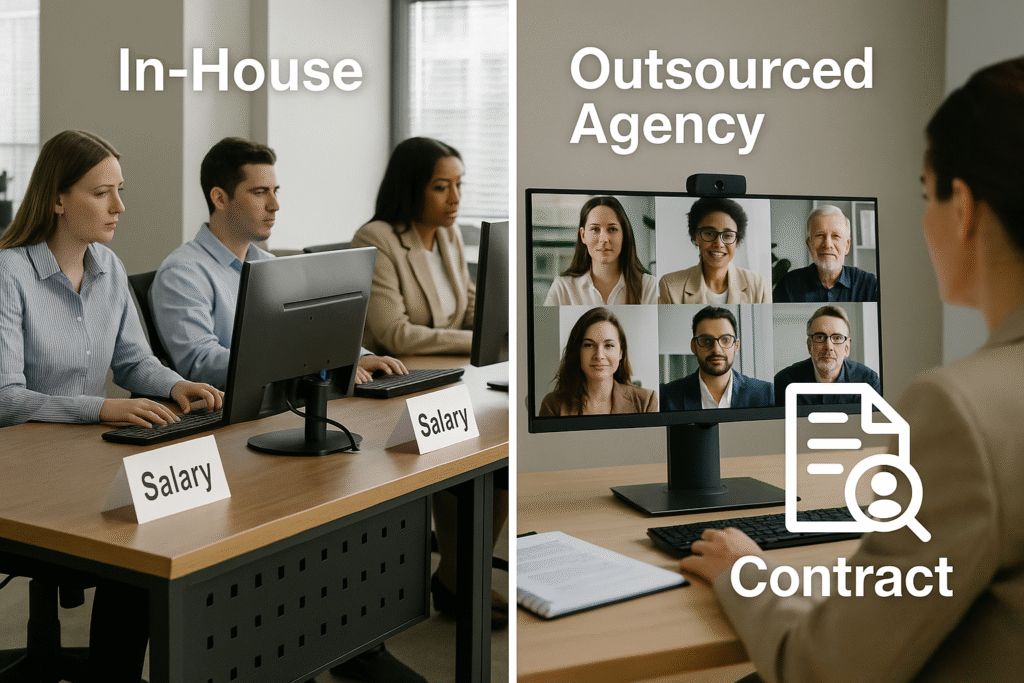
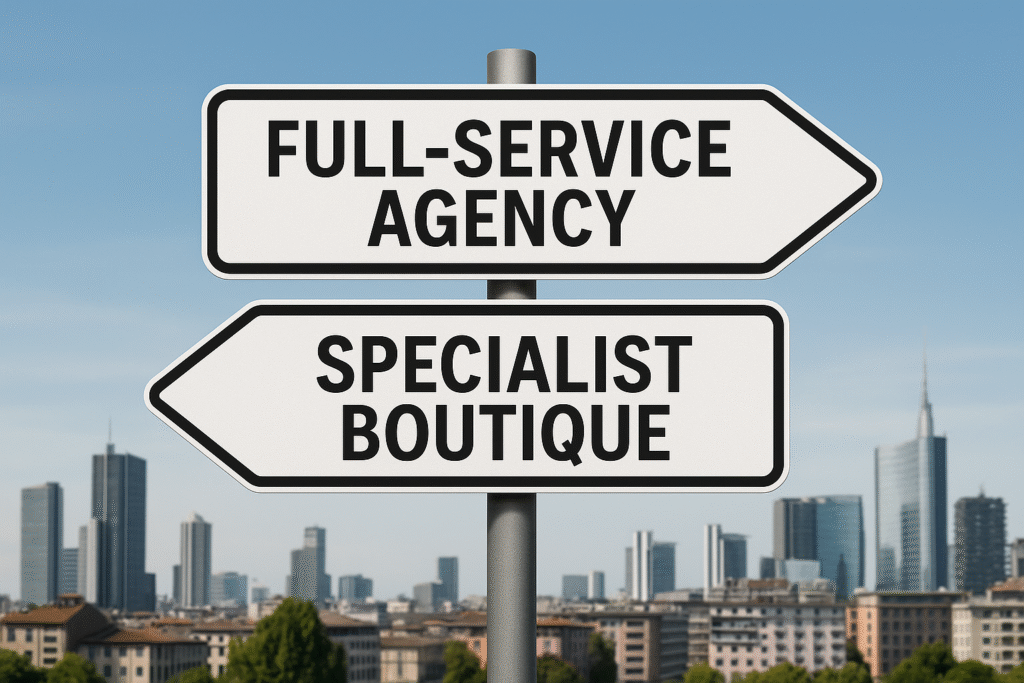
Why a full-service agency vs specialist boutique decision shapes your roadmap
Choosing between a full-service agency vs specialist boutique influences everything from campaign velocity to tech-stack complexity. Nail the choice now and you’ll accelerate ROI; miss it and you’ll juggle gaps, hand-offs, and budget bloat for years.
Full-service agency vs specialist boutique—key differences
The first litmus test in any full-service agency vs specialist boutique debate is scope depth versus focus depth.
| Factor | Full-Service Agency | Specialist Boutique |
| Channel Coverage | Paid, organic, creative, dev, PR | 1–2 mastery lanes |
| Team Size | 25–200 | 5–20 |
| Onboarding Speed | 4–6 weeks | 2–3 weeks |
| Average Monthly Spend | $15k – $50k | $5k – $20k |
| Depth of Niche Expertise | Moderate | Deep |
| Scalability Ceiling | High | Medium |
Strengths of a Full-Service Agency
- Single Point of Accountability – One vendor, one SOW.
- Shared Data Layer – Integrated dashboards reduce attribution gaps.
- Easier Channel Expansion – Add SEO or video without new contracts.
Strengths of a Specialist Boutique
- Cutting-Edge Expertise – Staff breathe one discipline all day.
- Faster Iteration Cycles – Fewer layers = quicker creative pivots.
- Often Lower Overhead – You’re not subsidizing services you don’t use.
Hidden Costs in the full-service agency vs specialist boutique choice
- Tool Redundancy: Big shops bundle SaaS you may already own.
- Management Complexity: Multiple boutiques mean more vendor calls.
- Ramp-Up Learning: Generalists sometimes “learn” your niche on the fly.
A 2024 Gartner Marketing Spend Survey shows brands juggling three or more boutiques spend 18 % more on vendor management than those using a single partner.
Decision Matrix: Which Model Fits Your Growth Stage?
| Question | Lean Full-Service | Lean Boutique |
| Launching new product lines? | ✔ | — |
| Dominant in one acquisition channel already? | — | ✔ |
| Need brand consistency across 7+ touchpoints? | ✔ | — |
| Budget caps under $10k/mo? | — | ✔ |
Hybrid Option: The Hub-and-Spoke Model
Use a small full-service “hub” for strategy and reporting, then bolt on boutiques as “spokes” for high-skill channels like TikTok ads or technical SEO.
Forrester’s 2025 Agency Marketplace Report calls hub-and-spoke the fastest-growing engagement structure among mid-market brands.
Frequently Asked Questions
Q: Can a boutique handle multi-channel strategy?
Some can, but verify they subcontract experienced partners or risk siloed campaigns.
Q: Is switching from boutique to full-service difficult?
Plan a 60-day transition with knowledge-transfer sessions and shared dashboards to preserve data integrity.
Q: How do retainers differ?
Full-service retainers bundle channels; boutiques charge per channel or project—see our agency pricing models guide.
Conclusion
Your full-service agency vs specialist boutique decision should balance channel breadth, niche depth, and management bandwidth. Map needs to the decision matrix, run the fit audit, and choose the partner structure that scales fastest without sacrificing expertise. When in doubt, pilot a hybrid and let performance data decide.
Remember: the right answer today might evolve as your brand grows—revisit the full-service agency vs specialist boutique debate annually.